

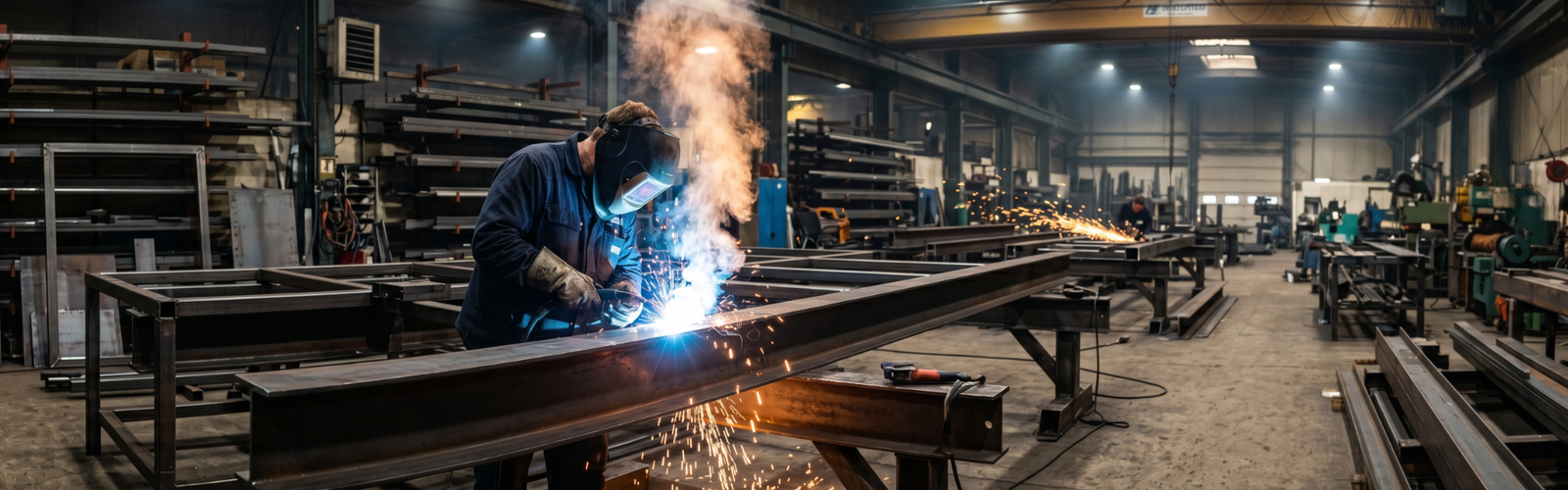
In industrial construction, steel fabrication plays a crucial role in the production and assembly of durable, high-performance structures. It involves creating robust frameworks specifically designed to meet the demands of industrial applications. The process includes several key stages such as design, material procurement, cutting and shaping, welding and joining, surface treatment, and quality control.
The fabrication process begins with detailed design and engineering, where precise plans and technical specifications are developed. Once the design is finalized, essential materials like structural steel, fasteners, and protective coatings are carefully sourced. Advanced machinery and modern tools are then used to cut, shape, and prepare steel components according to the required specifications.
Welding and joining are critical steps, where skilled professionals ensure that all components are securely connected with high precision. Following established standards, welders create strong and reliable joints that maintain the structural integrity of the final assembly.
To enhance durability and resistance to corrosion, surface treatment processes such as abrasive blasting and protective coating application are carried out.
Throughout every stage, strict quality control procedures are followed to ensure dimensional accuracy, weld strength, and adherence to design requirements. Non-destructive testing methods are also employed to identify any hidden defects, ensuring that the finished steel structures meet the highest standards of safety, quality, and performance.